Wireless substation communications can support SCADA, alarms, and telemetry when the radio path, mounting structures, and frequency meet the utility’s operational requirements. Assess these factors during site planning, before buying equipment or budgeting for a new tower.
In this ESEI case study, an electric utility needed to know whether a new substation could use a wireless link. The assessment helped the team identify which infrastructure it needed to carry into detailed design.
Jump to · Case study · 7 planning checks · Frequently asked questions
Case Study: How ESEI Assessed a New Substation Link
The challenge
An electric utility needed to assess wireless substation communications for a new site on a tight schedule. Three questions had to be answered first:
- Would a wireless link work at the proposed location?
- Could the utility use existing structures, or would it need another tower?
- Which frequencies made sense for the site?
ESEI’s approach
ESEI’s wireless engineering team reviewed the proposed location, analyzed terrain and line-of-sight conditions, and assessed whether a reliable link was feasible. The team evaluated:
- Antenna height and clearance
- The potential need for additional tower structures
- Operating frequency options

The outcome
The assessment identified where the utility could avoid unnecessary infrastructure costs. It also gave the team a clearer basis for deciding what to carry into detailed design.
7 Planning Checks for Wireless Substation Communications
- Define What the Substation Needs to Communicate
- Check the Terrain and Radio Path
- Evaluate Existing Structures Before Adding a Tower
- Compare Frequency Options Against Site Requirements
- Check How the Link Fits Into the Existing OT Network
- Plan How Operations Continue if the Link Goes Down
- Agree on Acceptance Criteria Before Commissioning
Use these checks to evaluate wireless substation communications before detailed design and turn the findings into decisions about the link, mounting structures, and commissioning.
1. Define What the Substation Needs to Communicate
List what the link must carry. For example, it might send alarms and telemetry to a control center, support supervisory control and data acquisition (SCADA), or carry maintenance data. Set availability, latency, and recovery targets for each function. For more on OT performance and reliability, see NIST SP 800-82 Rev. 3.
Ask your team Which functions must stay available during an outage, and how will operators handle a loss of the primary link?
2. Check the Terrain and Radio Path
Start with a terrain profile to identify ridgelines, vegetation, and structures that could affect the link. Then check the Fresnel zone, the space around the direct radio path. An obstruction in that space can weaken the signal even when both antennas have a clear line of sight. See ITU-R P.530-19.
Ask your team Which obstacles or site conditions should we verify in the field before relying on the path model?
3. Evaluate Existing Structures Before Adding a Tower
An existing tower or mounting structure may provide enough height and clearance. Suitability also depends on structural capacity, maintenance access, and whether the utility can install equipment there. If a new tower is needed, identifying it early lets the team plan for it in the budget and schedule.
Ask your team Can a change in antenna height or mounting location make an existing structure viable?
4. Compare Frequency Options Against Site Requirements
Operating frequency affects how a signal travels and how the path responds to obstructions and rain. Also consider spectrum availability, potential interference, and licensing requirements, then compare each option against expected link performance and the infrastructure it would require. See ITU-R P.530-19.
Ask your team Which frequency options meet our performance requirements, and what does each require in equipment, antenna placement, or licensing?
5. Check How the Link Fits Into the Existing OT Network
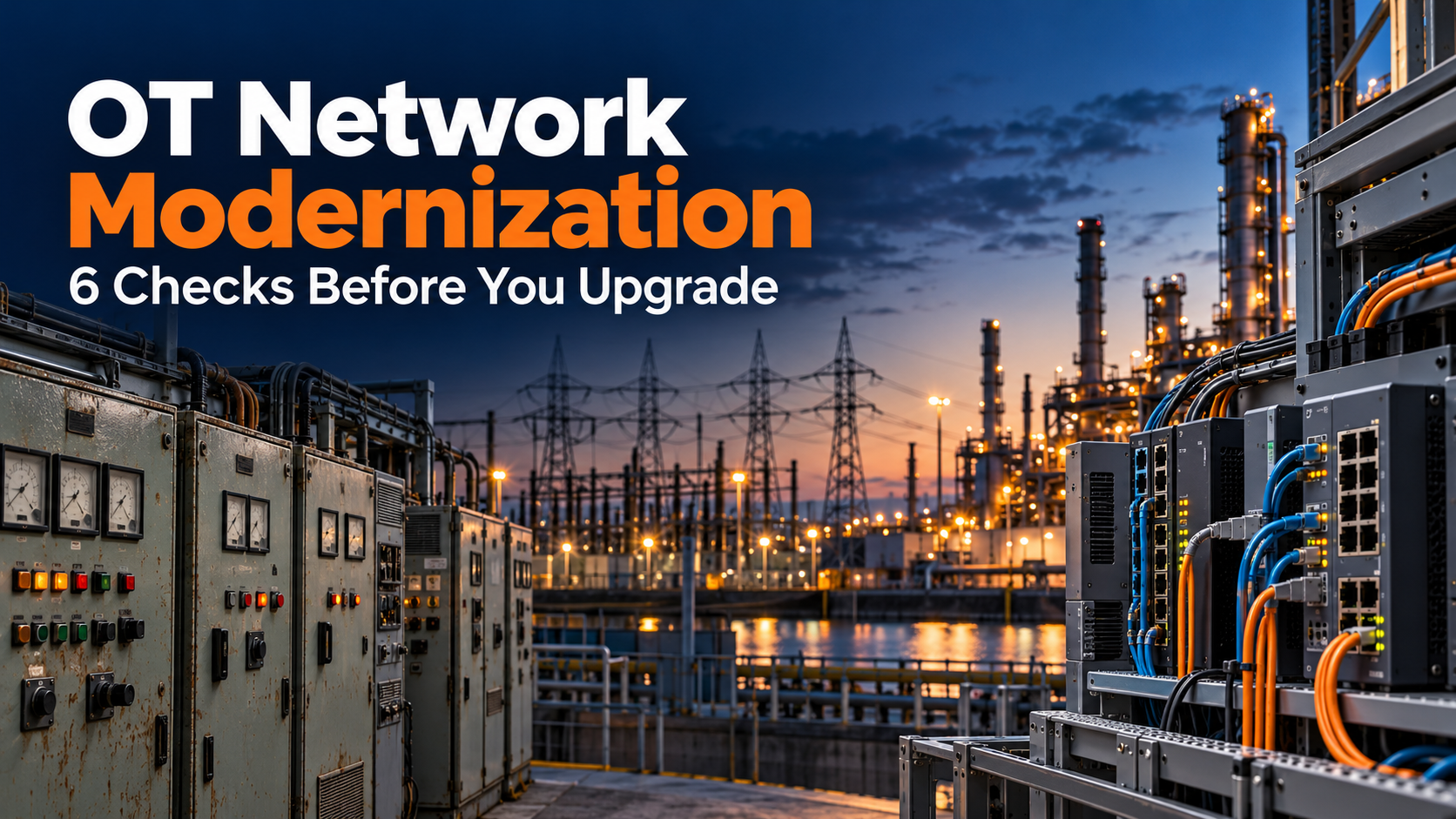
A new substation often joins an operational technology (OT) network with equipment from several vendors and generations. Check how the link will connect to the control center, carry existing traffic, and support monitoring and maintenance. Bring in operations and networking teams early so they can flag dependencies before commissioning. For related guidance, read ESEI’s guide to OT network modernization.
Ask your team Which existing systems, vendors, or traffic types will this link need to work with?
6. Plan How Operations Continue if the Link Goes Down
Decide what operators can still see and do if the connection drops. If a backup link is needed, check whether it shares dependencies with the primary link, such as a tower or power supply. A single failure can take both paths offline.
Ask your team What would take both connections offline, and what would operators do next?
7. Agree on Acceptance Criteria Before Commissioning
Set acceptance criteria while the design is still flexible. Depending on the application, commissioning could verify that alarms reach the control center in the required time, confirm the link supports expected traffic, and show how the network behaves when the primary path is interrupted. Document what the utility will test and who signs off.
Ask your team What evidence will show the link is ready to support normal operations?
Frequently Asked Questions
Can wireless substation communications support SCADA?
Yes, when the link meets the SCADA application’s requirements for availability, latency, and recovery. Feasibility also depends on the radio path and on how the link integrates with the utility’s existing OT network. See NIST SP 800-82 Rev. 3.
Does a wireless substation link always require a new tower?
No. An existing structure may be suitable if it provides the required antenna height and clearance, can support the equipment, and is available to the utility. A feasibility assessment shows whether a new tower belongs in the project budget.
When should utilities assess wireless substation communications?
During site and network planning, while the team still has flexibility on mounting locations, tower requirements, and connectivity options. Findings can then inform detailed design, procurement, and the construction schedule.
Planning Communications for a New Substation?
Headquartered in El Paso, Texas, ESEI helps electric utilities assess wireless feasibility, evaluate tower and mounting options, and plan connections to existing OT networks. Talk to ESEI about your wireless substation communications project.